Reduction of US Treasuries
The US Supreme Court's decision on trade tariffs is expected soon. Along with rising inflation expectations, this could put pressure on yields.
Global economic data continues to surprise positively, signaling a slight cyclical acceleration. With Fed rate cuts, liquidity injections, and fiscal support, equity markets remain well-supported. We stay optimistic and start the new year with a risk-on approach.
Text: Nicola Grass

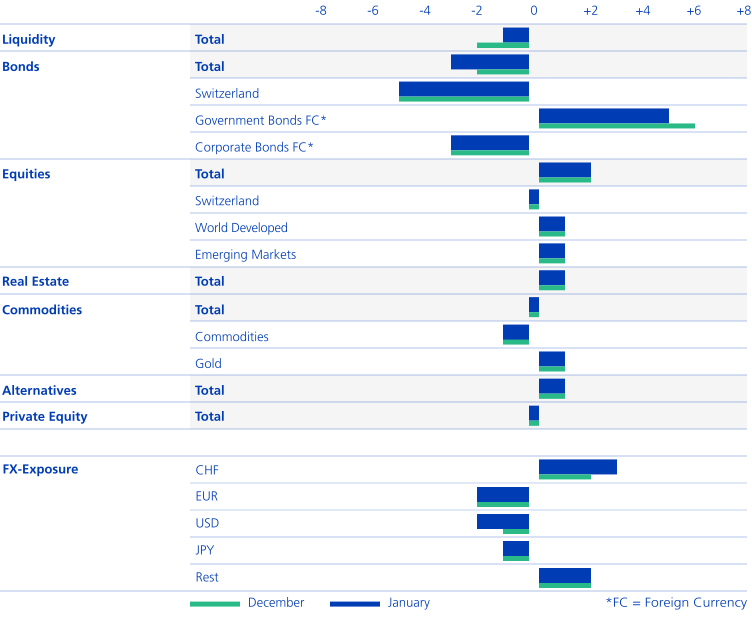
Government bond yields rose almost everywhere in December, although there was no clear trigger. The reasons likely lie in strong economic data, rising inflation expectations, and the pending US Supreme Court decision, which looms like a Damocles sword over US trade tariffs. Investors are already pricing in several rate hikes for 2026, particularly in countries like Australia, Canada, Sweden, and Japan. However, we are sceptical of this scenario. Central banks are unlikely to initiate a rate hike cycle while the US Fed remains in a rate-cutting cycle. Therefore, we believe the recent rise in yields is not sustainable and remain overweight in global government bonds. However, we are acting more cautiously with US Treasuries due to the pending court decision and are slightly reducing our overweight position there. Our favourites remain Australia and emerging markets (EM), both of which currently offer high real yields.
We are not making any changes to equities for now. Pharma and tech remain our top picks, with a regional focus on emerging markets. The positive environment for equities is likely to persist, as economic data has been consistently surprising to the upside. At the same time, financial conditions remain highly accommodative, supported by interest rate cuts and low credit spreads (see Chart 1).
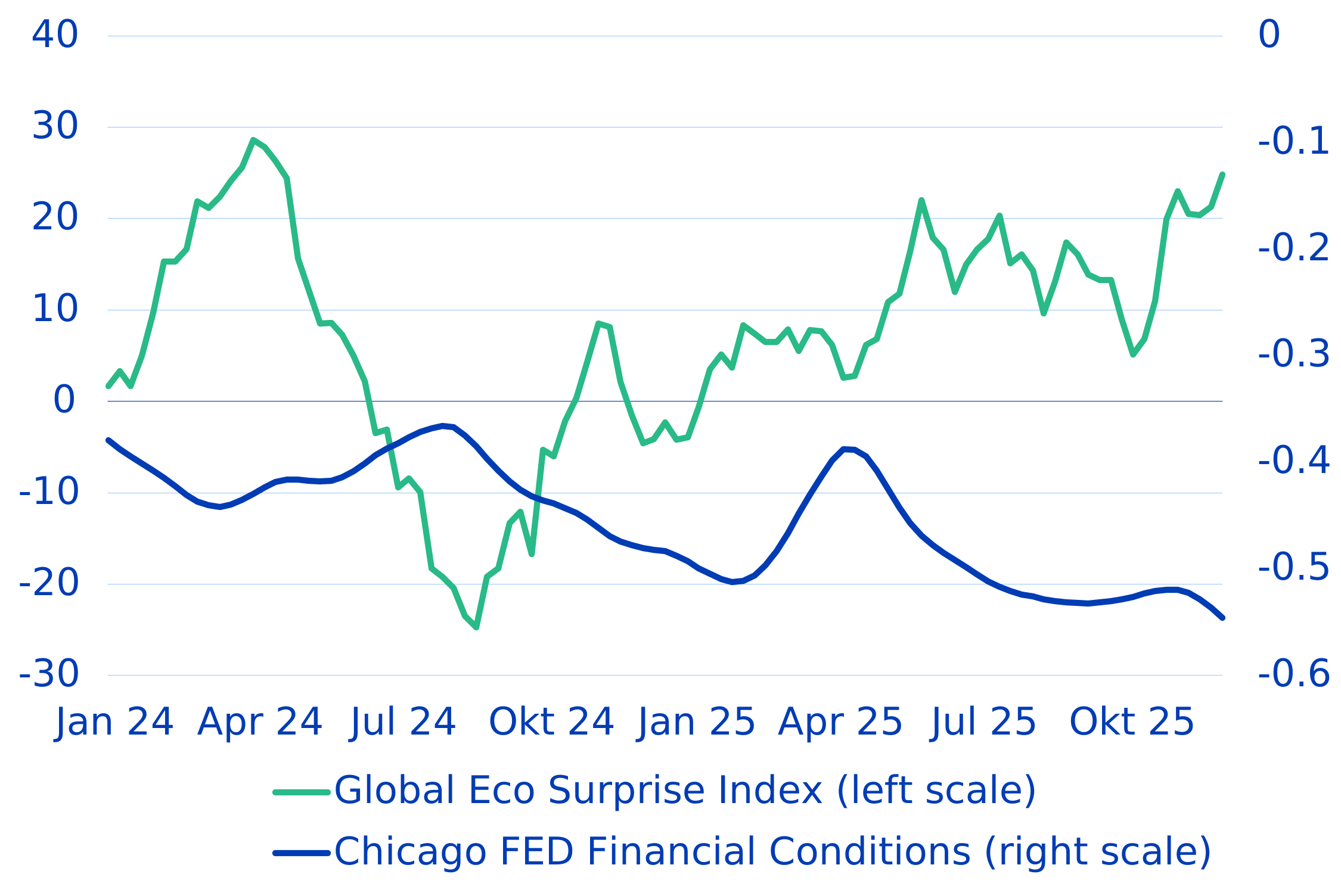
Together with expansionary fiscal policies, these factors are likely to drive corporate earnings. Expectations for 2026 stand at 13% in the US, 8% in Europe, and 11% in Switzerland. In addition to tech and pharma, this environment could also revive previously stagnant traditional cyclical sectors. However, industrials, small caps, or the European market region do not yet fully convince us fundamentally. Therefore, we remain overweight in the broader market for the time being.
We are not making any changes in the alternatives segment. Gold and Swiss real estate remain overweight. However, the results of the recently published Swisscanto CIO Survey give us some pause, as gold and Swiss real estate appear to be consensus calls. As a result, these two asset classes are now on our watchlist for potential profit-taking in the new year. We remain underweight in commodities; our assumption of lower energy prices was confirmed in December, thanks to a sharp correction in natural gas prices. Cat Bonds also remain attractive, even though risk premiums (spreads) have narrowed significantly and a relatively event-free seasonal period lies ahead.
“BLOOMBERG®” and the Bloomberg indices listed herein (the “Indices”) are service marks of Bloomberg Finance L.P. and its affiliates, including Bloomberg Index Services Limited (“BISL”), the administrator of the Indices (collectively, “Bloomberg”) and have been licensed for use for certain purposes by the distributor hereof (the “Licensee”). Bloomberg is not affiliated with Licensee, and Bloomberg does not approve, endorse, review, or recommend the financial products named herein (the “Products”). Bloomberg does not guarantee the timeliness, accuracy, or completeness of any data or information relating to the Products.